How to qualify B2B leads before the sales handoff.
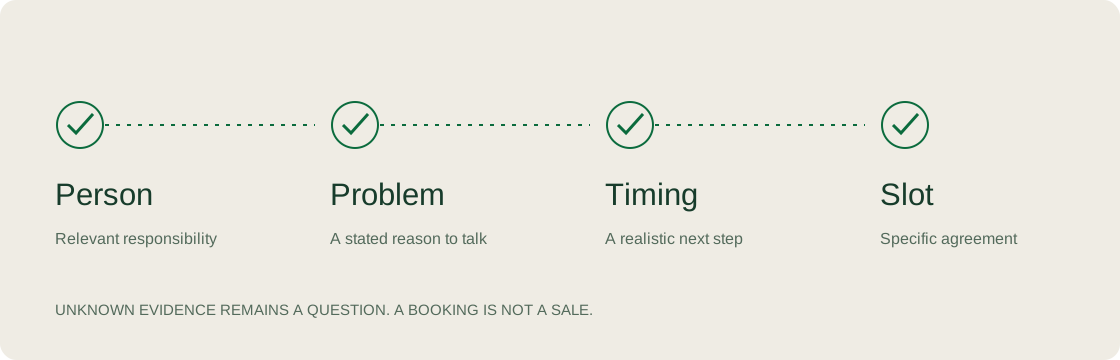
Here is how to qualify B2B leads after outreach: classify the reply, retain the account-fit evidence, then check 4 things: the right person, a stated problem, real timing and an agreed meeting slot. ReplyLead uses cold email and LinkedIn to open conversations; qualification establishes what the prospect actually agreed to and what your sales team still needs to learn.
Account fit and meeting readiness answer different questions. A company can fit your target market without wanting a conversation. A person can agree to a time without owning the problem. Keep existing qualification work and add the new evidence from the reply; do not restart the account review every time someone responds.
01
Classify before you qualify.
Separate interest, questions, referrals, timing, out-of-office messages and refusals. A delivery response or an automatic reply is not interest. An opt-out takes priority over a promising company profile. Use the actual thread, not a subject line or an isolated keyword.
02
Preserve the evidence that already exists.
Carry the account-fit decision, relevant source and exclusions forward. If the list has already been qualified, do not ask the prospect to prove the same basic fit again. Revisit it when the prospect supplies contradictory information or your team explicitly changes the criteria. For a new account assessment, use the separate ICP scoring calculator.
03
Resolve the next missing fact.
Use the conversation to establish the person's responsibility, the problem worth discussing and realistic timing. Ask the smallest useful follow-up question. An unanswered budget question need not become an automatic rejection unless your agreed criteria require it at that stage.
04
Confirm the handoff, not just the calendar.
Agree the purpose, participants and time of the conversation. Give the receiving salesperson the thread context, open questions and any commitments made. A calendar acceptance establishes a booking. It does not establish attendance, a sales opportunity or revenue.
The four checks are an acceptance framework. Passing a checklist does not predict whether a customer will buy.
USE THE EVIDENCE YOU HAVE
Is this ready for a sales handoff?
Choose the reply type and the status of each check. The result shows the next action and the missing context. It does not verify the conversation or update your CRM.
NEXT ACTION
Read and classify the reply first.
A favorable account profile cannot resolve an unknown response. Establish whether this is interest, a question, a referral, a later date, an automatic response or a refusal.
Planning guidance only. No lead was verified, no CRM status was changed and no meeting was booked.
Similar-looking replies need different next steps.
Hypothetical reply examples, not customer conversations or performance evidence.
Reply
What it establishes
What remains open
Useful next action
"Send me some information."
A request for information.
Whether there is a relevant problem or interest in meeting.
Answer the request in context and ask one relevant question. Do not mark a meeting accepted.
"Our operations team owns that."
A possible referral direction.
The responsible person and whether an introduction is welcome.
Clarify the referral and route it with context. Keep the original contact separate from the referred person.
"Let's talk next Wednesday afternoon."
A proposed meeting window.
The exact time, time zone, participants and any missing qualification facts.
Resolve scheduling with the existing conversation context. Do not ask questions the thread already answers.
"Try us again next quarter."
A later-timing response.
A useful follow-up date and what should be different then.
Record the stated timing and confirm an appropriate follow-up. Do not create an immediate sales booking.
"Remove me."
An opt-out.
No qualification question is needed.
Apply the suppression instruction and stop the sequence. Do not turn the refusal into an objection-handling campaign.
Make the salesperson's first question a useful one.
A good handoff contains enough context to continue the conversation without making the prospect repeat it. Include the agreed problem, the person's role as reported, the account-fit evidence already reviewed, the meeting purpose and the unresolved questions. Keep the original thread available to the receiving team.
HYPOTHETICAL HANDOFF
"They booked" is not the whole record.
Context: The operations lead wants to discuss reducing manual scheduling. Account fit was reviewed before outreach. They asked for a conversation next Wednesday.
Open: The exact time zone and who else owns the workflow are not confirmed. No budget statement was made.
Next action: Confirm the slot and participants, then pass the thread and agenda to the salesperson. Do not label the record an accepted opportunity before the sales team has assessed it.
Responsibilities can be more complicated than a job title. The commercial solar meeting criteria illustrate the difference between an interested site operator and the people needed for a project decision.
A lean record can store each check as confirmed, unknown or contradicted, with a dated source. Preserve the reason for a change. A new statement from the prospect can update the evidence; an enrichment failure should remain an error rather than becoming proof that the account is unsuitable.
Measure qualification without rewarding empty bookings.
Choose one cohort definition and keep it stable, such as unique prospects first showing relevant interest during a calendar month. Report the observation window and keep open records visible. A meeting scheduled in October and held in November should not become two leads.
Track the stages separately
Relevant interest: a prospect expressed interest in the stated business conversation.
Booked: a specific slot was agreed and recorded.
Held: the meeting took place.
Accepted opportunity: the sales team accepted a defined next commercial step.
Closed customer: the deal was won and attributed under the agreed rules.
Inspect why records do not advance
Wrong responsibility or unsupported account fit.
Unresolved timing or missing participant.
No-show, cancellation or duplicate booking.
Sales rejection with a documented reason.
Open evaluation that has not matured yet.
Do not use total replies as the denominator for a positive-interest rate without separating automatic responses and refusals. Do not compare one month's new bookings with a different cohort's closed revenue and call the difference a conversion rate. No universal qualification benchmark is claimed here.
Where managed qualification fits.
ReplyLead manages B2B outreach through cold email and LinkedIn, including reply handling, qualification against agreed criteria and meeting coordination. Your team defines the commercial fit, takes the sales conversation and determines whether an opportunity should advance. Read the appointment-setting service scope and managed outbound process.
The commercial model includes a monthly technology and infrastructure fee plus an agreed share of attributable closed revenue. The fixed cost remains when nothing closes. Qualification definitions, handoff responsibilities and attribution should be agreed before launch; see current pricing.
For your workflow, decide which evidence is required before a meeting and which questions belong in discovery. Overloading the first reply with a long questionnaire can create friction; removing every qualification requirement can waste sales time. Use rejection reasons and attendance from your own campaign to refine the balance.
What this checker cannot establish.
The checker is a planning tool. It does not read your inbox, validate identity, infer budget or certify purchase authority. Confirmed means you selected that status; it is not independent verification. A positive result is readiness for an agreed handoff review, not a claim that a deal will close.
This page addresses post-reply B2B qualification. It does not replace account selection, a regulated eligibility check, a complete discovery call or the buyer's procurement process. Preserve completed qualification work unless new contradictory evidence or an explicit scope change requires a review.
How the decision rules work.
Reply category takes priority. Refusals stop the proposed outreach; automatic replies, referrals, questions and later timing each get their own next action. Only relevant interest proceeds to the four acceptance checks. Unknown or contradicted evidence stays visible, and a confirmed calendar slot cannot cancel another unresolved check.
For the stage before these checks, use the sales email reply-category matrix to connect the response with the appropriate action and reporting treatment.
The four checks come from ReplyLead's published appointment-setting criteria. The checker turns them into an explicit operational decision path. It is not a statistical scoring model, and no point total is presented as buying probability. Interaction events record tool use, not leads or bookings.
Questions about qualifying B2B leads.
How do you qualify a B2B lead after a reply?
Classify the reply, retain existing account-fit evidence and resolve the missing information needed for a useful sales conversation. ReplyLead uses four acceptance checks: the right person, a stated problem, real timing and a confirmed slot. Keep unknowns visible and agree the handoff with the sales team.
Is an interested reply a qualified lead?
Interest is evidence of engagement, but it does not establish every qualification requirement. Confirm what the prospect wants to discuss, the relevant responsibility and the next step. Do not count automatic replies or refusals as interest.
Does agreeing to a meeting make a prospect qualified?
A confirmed slot establishes a booking. It does not resolve an unknown role, an unsupported problem or a mismatch with the agreed criteria. The meeting can still require a qualification review, and attendance and opportunity acceptance remain separate stages.
Should we requalify an account that already passed our ICP review?
Preserve completed qualification work. Add new conversation evidence and review a prior decision when contradictory information or an explicit change in criteria makes that necessary. Do not restart the same account assessment on every reply.
What should happen when a prospect asks to talk later?
Record the stated timing and agree an appropriate follow-up if welcome. Keep it separate from an accepted immediate meeting. A later date can be useful context without proving an active opportunity.
Does this tool update our CRM or book a meeting?
No. It organizes the statuses you select into a recommended next action. It does not read an inbox, verify a prospect, submit a lead, change a CRM record or create a booking.
How should we measure qualification quality?
Keep interested prospects, bookings, held meetings, accepted opportunities and customers separate. Use a consistent cohort, deduplicate records and review rejection reasons. Open opportunities and unmatched records remain visible instead of being treated as closed results.
ReplyLead methodology - reply categories, evidence checks and routing. Checked 17 October 2026.
How ReplyLead works - managed outreach and client sales responsibilities. Checked 17 October 2026.
ReplyLead pricing - fixed infrastructure cost and agreed revenue share. Checked 17 October 2026.
ICP scoring calculator - separate account-fit workflow; it does not establish post-reply meeting readiness. Checked 17 October 2026.
Examples are hypothetical. The decision rules are operational recommendations, not measured conversion results.
Agree what a useful meeting looks like.
Bring your target market, sales capacity and qualification requirements. We can discuss a managed workflow that preserves context from the first reply through the handoff.