Solar lead generation. Start with the site. Reach the decision.
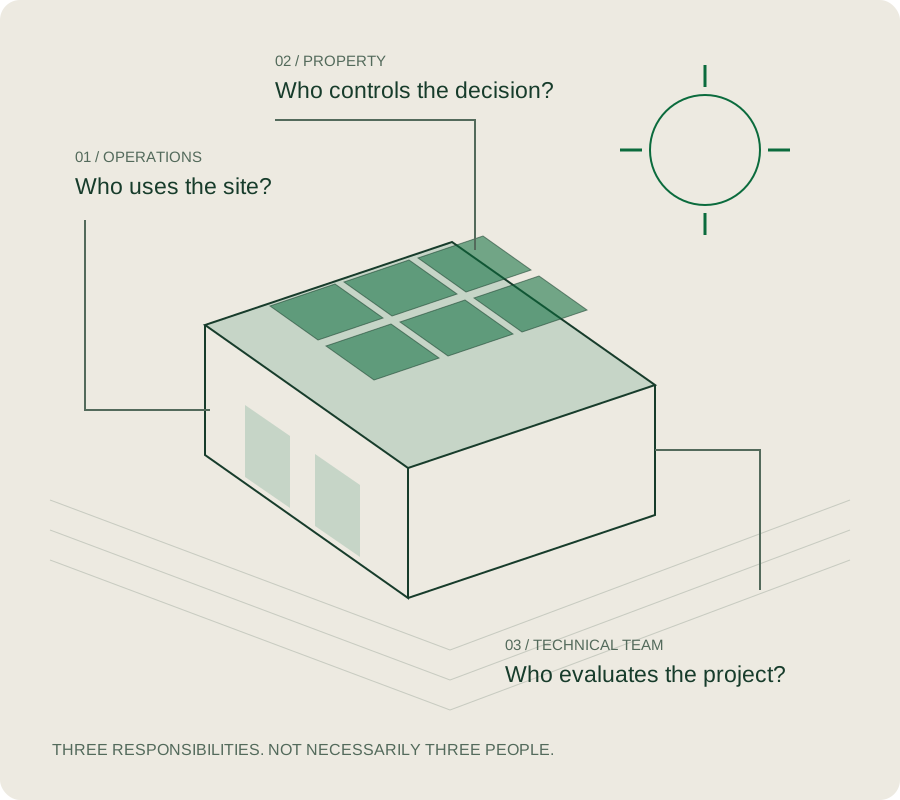
ReplyLead supports solar lead generation for B2B providers through cold email and LinkedIn. A useful commercial solar conversation connects 3 pieces of context: the operating site, who can authorize a project, and an agreed next step. ReplyLead manages prospecting and replies; your team evaluates the site, designs the system and closes the project.
Commercial solar prospects need different conversations.
This page is for solar installers, engineering and construction providers, and solar technology businesses selling to organizations. The campaign starts with the project or product you can deliver and the territory you can support. A list of businesses with large buildings is only a research starting point.
01
Reach commercial site operators
You install solar for operating businesses. Establish the facility type, service territory and appropriate operations or finance contact. Find out whether the business controls the property before treating a facilities conversation as a project decision.
02
Develop a property portfolio conversation
You work across buildings or locations. Distinguish a portfolio-level sponsor from local facility contacts. Agree whether the next discussion concerns one pilot site, a review of several sites, or an introduction to the person responsible for property decisions.
03
Sell equipment or software to solar companies
You supply installers, developers or operators. Your buying unit is a solar business, not the building occupant. Target the relevant commercial, engineering or operating workflow and have your team explain compatibility, procurement and technical requirements.
Still defining the market? The planner keeps an explicit undecided state. It does not turn an incomplete brief into an approved campaign.
02 / A PRACTICAL CAMPAIGN STARTING POINT
Who needs to be in the conversation?
Build a starting approach for your team. The result changes with your market and what you know about the site. It organizes your assumptions; it does not verify a company or assess a solar installation.
YOUR NEXT CONVERSATION
Define the market before choosing the contact.
Choose whether you sell site projects, portfolio work or a product to solar businesses. Until that is clear, keep property responsibility and technical readiness marked as unknown.
Planning guidance only. No company was checked, no outreach was authorized and no inquiry was sent.
Recommended research and conversation priorities; examples are not validated prospects.
Campaign
Research before outreach
Question worth asking
Useful next step
Commercial installation
Serviceable location, operating activity, possible site contact, existing relationships to exclude.
Who is responsible for evaluating energy projects at this location, and who controls property decisions?
An introduction or scoping call with the responsible team. Request detailed site data only when appropriate and agreed.
Multi-site portfolio
Portfolio structure, central versus local responsibilities, relevant operating regions.
Would a first discussion cover a pilot location or a portfolio review?
A named sponsor, an agreed review scope and the right local participants.
Solar equipment or software
Installer or developer business model, relevant workflow, supported technology and geography.
Which part of your delivery process would this need to fit, and who evaluates that fit?
A product discussion tied to a stated workflow, with your technical owner available.
Do not personalize with a claim that a roof is suitable, a business has a high electricity bill, or a project will pay back within a particular period unless your team has evidence for that exact statement. A public expansion announcement can justify a research question. It does not establish purchase intent.
HYPOTHETICAL EXAMPLE / NO CUSTOMER RESULT
The warehouse manager is interested. The property decision is still open.
A warehouse operator replies that energy costs are on its agenda, but it leases the building. Record the interest and the leaseholder context separately. Ask who needs to participate in a preliminary conversation. Do not describe the contact as a project approver or send an installation proposal as though property permission were established.
A useful handoff says: "The operations contact wants an initial discussion. Property-owner participation is unresolved. The next call should establish the decision process and whether a site review is appropriate." Your team can then accept, redirect or defer that conversation.
04 / A BETTER DEFINITION OF QUALIFIED
A solar appointment is not a feasible project.
Agree your meeting acceptance criteria before outreach. A practical initial definition can include an in-scope organization, a relevant participant, expressed interest in a specific discussion, and a next step that your sales team accepts. Unknown property or technical details stay visible. They should not be filled in by assumption.
Context for the sales handoff
The account and operating location, with the evidence used to select them.
The contact's reported responsibility and the people still missing.
What the prospect actually said, including objections and timing.
The agreed topic, date and participants for the next conversation.
Open questions about property control, scope or technical evaluation.
Questions for your technical team
Is the proposed site and mounting approach suitable?
What data and permissions are needed for a useful assessment?
Which system, storage and electrical requirements apply?
What local utility, planning and engineering reviews are needed?
Which commercial assumptions can the team substantiate?
The US Department of Energy describes mounting structures, inverters and storage as distinct parts of a photovoltaic system. A prospecting record cannot replace those technical decisions. See DOE's solar system design overview. The workflow here is outreach planning, not a design or a savings estimate.
05 / RESPONSIBILITY, LAUNCH & COST
Managed prospecting. Technical decisions stay with your team.
ReplyLead's campaign work
Define the audience with you, research relevant accounts and contacts, prepare cold email and LinkedIn messaging, operate the agreed sending infrastructure, handle replies and coordinate the agreed handoff. Confirm channel scope, exclusions, approval responsibilities and reporting before launch.
Your list should exclude existing customers, active opportunities, unsuitable territories and organizations you do not want contacted. A suppression list is an operating input, not an optional cleanup after a reply.
Your solar team's work
Confirm service coverage, project or product fit, substantiated claims and the people available for sales and technical conversations. Own system design, site assessment, financing terms, proposals and closing. If a specialist partner is needed, agree that work and its price separately; no solar engineering partner is named here.
Launch depends on an agreed audience, working infrastructure, approved messaging and available handoff capacity. New sending domains may need weeks of reputation-building. No fixed launch date is promised on this page.
ReplyLead's published commercial model is a monthly technology and infrastructure fee plus an agreed share of attributable closed revenue. The fixed infrastructure cost remains in a period when nothing closes. Agree revenue attribution, existing-relationship exclusions and the delivery scope in writing. Review current pricing and remaining fixed costs and how the managed outbound process works.
06 / COUNT PROGRESS AT THE RIGHT STAGE
Measure accepted project conversations, then follow the cohort.
Keep accounts researched, contacts reached, interested replies, booked meetings, held meetings, accepted opportunities and closed projects separate. A rescheduled meeting should retain the original record. A duplicate booking, supplier pitch or support request is not a new solar opportunity.
For a defined campaign cohort, review which conversations your team accepted and why others were rejected. Check whether attendees represented the expected responsibility, whether the territory and project type fit, and whether technical follow-up occurred. Report open opportunities separately from won revenue so a long evaluation cycle does not look like an immediate loss or an early win.
No solar-specific ReplyLead conversion rate or customer outcome is established on this page. Set an initial baseline from your own campaign and sales records before agreeing a numerical growth target. Review the definitions behind ReplyLead's published evidence; unrelated campaign results are not a solar forecast.
When this approach does not fit.
This is not a service for buying household solar leads, obtaining consumer installation quotes, or calculating subsidies. It also does not establish land rights, engineering feasibility, project financing or local permission to build. A solar provider without a defined delivery territory or a team able to handle technical conversations should resolve those constraints before increasing outbound volume.
For international campaigns, agree supported countries, languages and local delivery responsibilities first. The stakeholder questions can travel across markets; engineering rules, incentives, utility processes and economics cannot be assumed to do so.
How the planner reaches its recommendation.
The planner uses explicit rules, not a hidden lead score. The sales situation selects the likely buying unit. Reported property responsibility identifies an unresolved introduction. Technical readiness determines whether the next step is scoping, clarification, later follow-up or stopping after a refusal. A favorable selection never labels a company qualified automatically.
These are ReplyLead's recommended planning rules, not a validated prediction model. All selections remain in the current browser tab. Tool interaction counts do not represent inquiries or booked meetings. The visible playbooks remain available when JavaScript is disabled.
Questions about commercial solar lead generation.
How do you generate commercial solar leads?
Start with a defined project or product, delivery territory and account profile. Research relevant businesses and responsibilities, then use a specific cold email or LinkedIn conversation to establish interest and an agreed next step. A record in a database is not evidence that the organization wants solar.
Who should commercial solar outreach target?
The answer depends on what you sell. Site projects may involve operations, facilities, finance and property decision makers. Portfolio projects may need a central sponsor plus local contacts. Equipment or software sales need the team responsible for that workflow inside a solar business. Confirm responsibility instead of relying on a job title.
Does this service provide residential solar leads?
This page concerns managed B2B prospecting for commercial solar providers and companies selling to solar businesses. It does not describe household quote requests, shared consumer lead purchases or consumer installation services.
What makes a solar meeting qualified?
Agree the definition with your sales team before outreach. An initial definition can require an in-scope organization, a relevant participant, expressed interest in a stated topic and an accepted next step. Site feasibility, property permission and financing remain separate questions.
Can the planner predict savings or project viability?
No. It organizes the sales situation, reported property responsibility and readiness for a technical discussion. It does not inspect a site, verify prospect statements, calculate savings or determine incentives. Your technical team owns those assessments.
Can this workflow be used outside the United States?
The stakeholder questions can inform campaigns in other markets, subject to agreed delivery capability and local requirements. Confirm countries, languages, service coverage and technical responsibilities. Do not transfer US engineering, utility, incentive or commercial assumptions to another country.
How much does ReplyLead charge for solar lead generation?
ReplyLead publishes a monthly technology and infrastructure fee plus an agreed share of attributable closed revenue. The fixed fee remains when nothing closes. Review current pricing and agree campaign scope, attribution and exclusions before launch.
Sources and evidence boundaries.
ReplyLead: how it works - targeting, sending infrastructure, reply handling and sales handoff. Checked 17 October 2026.
ReplyLead: pricing - monthly infrastructure fee and revenue-share structure. Checked 17 October 2026; confirm current terms for your scope.
ReplyLead: methodology - company evidence, reply categories and handoff process. Checked 17 October 2026.
ReplyLead: appointment setting - qualification criteria and the distinction between booked and held meetings. Checked 17 October 2026.
The prospecting playbooks, handoff example and planner are original operational guidance. They are not engineering advice, customer results or measured solar campaign benchmarks.
Give the next conversation a clear purpose.
Tell us what you sell, where your team can deliver and which organizations you want to reach. We can discuss whether managed outbound fits that market.