Cold email CTAs for software sales should give the buyer 1 clear next action that fits the conversation. A first introduction, a request for technical details and an agreed meeting need different endings. Start with what the buyer actually said, then check what your team can substantiate.
Updated 17 October 2026 / By Mark Glazer, ReplyLead
THE QUESTION BEHIND THE QUESTION
What are you asking this person to commit to?
1 actionPer message, with a clear purpose.
4 contextsWorkflow, integration, security and rollout.
5 situationsFirst touch through an explicit stop.
01 / CHOOSE THE JOB OF THE MESSAGE
A relevant next step starts with the current conversation.
This is a planning aid for software sales teams. The examples are original recommendations, not tested winning lines. It does not read an inbox, assess a real person or send a message.
NO SITUATION SELECTED
Start with what the buyer actually said.
Choose a situation to see the next action and its limits. Nothing is inferred about a real prospect.
A suggested question is not permission to contact someone or evidence of buying intent.
No names, addresses or message text are collected. Tool events do not include your choices. This is a local decision aid, not a mailbox connection.
The decision, without a tool
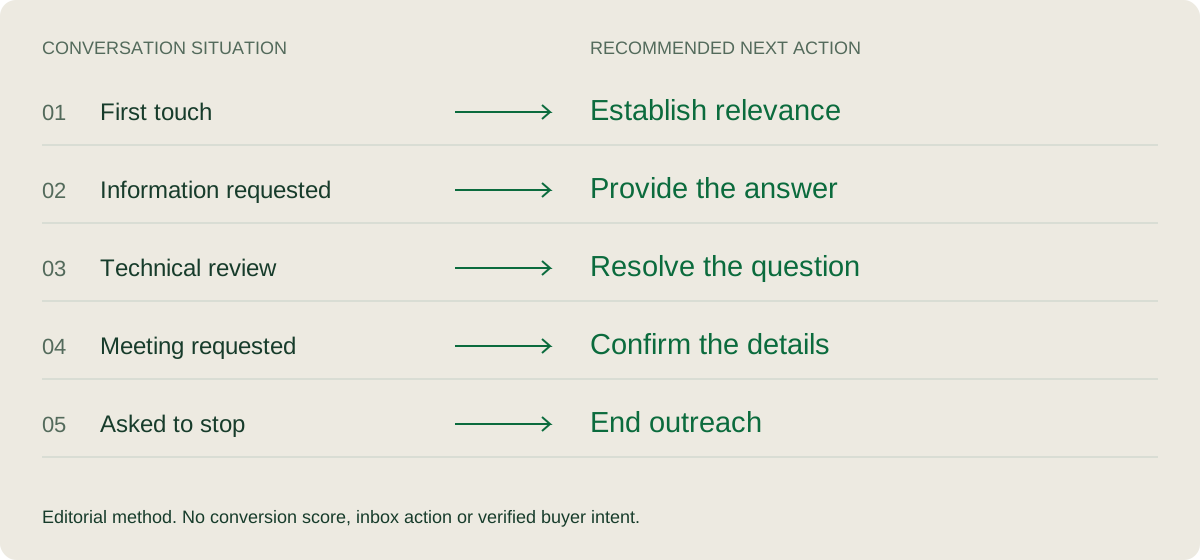
For an unintroduced buyer, establish the relevance of one specific conversation. If they requested information, supply that information when it is ready and appropriate to share. If they want a technical review, resolve the actual technical question with the right owner. If they asked to meet, confirm scheduling details. If they asked you to stop, stop outreach.
An unverified product capability is a reason to check internally. It is not a reason to write a more confident CTA.
The next action follows the conversation, not a fixed progression through increasingly forceful meeting requests. This is ReplyLead's proposed decision method, not a conversion benchmark.
02 / MAKE THE QUESTION SPECIFIC
Four software conversations. Four different commitments.
A software buyer can be exploring a workflow, validating a connection, reviewing a risk or planning an implementation. The person answering one question may not own the purchase. These illustrative endings assume the preceding message accurately establishes the situation.
01 / WORKFLOW
Find the person who owns the work.
"Who owns CRM data reconciliation on your team?"
This is a routing question for an uncertain ownership situation. It does not assert that the recipient has a data problem. Replace the example workflow with the actual process you can support.
Watch for: A referral tells you who to ask. It does not prove interest, budget or approval authority.
02 / INTEGRATION
Make the compatibility question concrete.
"Would a supported-connection summary help your team assess the fit?"
Use this only when an accurate summary exists and fits the discussion. A named platform alone is insufficient evidence that the buyer's version, deployment, authentication method or required data flow is supported.
Watch for: A technical reviewer can identify a requirement without agreeing to buy or attend a sales demo.
03 / SECURITY
Use the buyer's review route.
"Which security-review channel should we use for the documents you requested?"
This assumes a real request. Confirm the approved recipient, access conditions and appropriate sharing method before attaching sensitive material. Do not invent a certification or imply that a document answers every control question.
Watch for: An information-security review is an evaluation step. It is not procurement approval.
04 / ROLLOUT
Separate scoping from a launch promise.
"Which team should join the rollout scoping discussion?"
This fits an agreed implementation conversation. The purpose is to establish scope and ownership. Actual timing depends on the product, buyer resources, dependencies and commitments that both teams have confirmed.
Watch for: Interest in a pilot does not establish access to production data, integration support or a rollout date.
For target selection and acquisition economics, use the existing SaaS cold-email field guide. For the difference between a user, evaluator, sponsor and approver, use the buyer-role map.
When the product being sold is a security solution, the cybersecurity prospecting guide connects the evaluation question to the relevant buying roles and evidence. Selling a security product and answering a general software security review are different contexts.
03 / THE REPLY CHANGES THE JOB
Answer the request before adding another ask.
"Send the integration details."
Supply the requested, approved details through the appropriate channel. A reply that simply asks whether they want the details again adds an unnecessary step. If the answer is not ready, establish the missing information with your team; do not imply that a link or attachment is present when it is not.
"Can we meet next week?"
Move to scheduling. Use the actual availability, time zone, participants and purpose. A general question about interest no longer addresses the request. Confirm the meeting through the calendar workflow rather than treating the email reply as a booked event.
"We need the technical team."
Clarify the technical decision and invite the appropriate owner. A standard product walkthrough may not answer the blocker. Record what the buyer needs to learn and what evidence your team can provide before setting an agenda.
"Please stop contacting me."
Record the suppression in the actual sending system and end outreach to that recipient as required. Do not send a final persuasion attempt. The finder on this page changes no live records; an operator or connected workflow must perform the action.
Use the sales-email reply categories to keep information requests, referrals, objections and opt-outs distinct. ReplyLead's copywriting rubric also separates one clear ask from multiple competing requests. That house rubric is not proof that one sentence will improve a campaign's results.
04 / MEASURE THE CONSEQUENCE
A reply is the beginning of the measurement.
Compare CTAs within a defined buyer segment and the same conversation stage. Asking for a document on a first touch and confirming a meeting after an explicit request are different jobs, not a fair wording test.
Define the decision.
For example, test whether a relevant workflow question or an approved material question produces more sales-accepted conversations in one software segment. This is a hypothesis, not a forecast.
Keep the comparison interpretable.
Record the exact version, audience rules, dates, channel, delivery evidence and follow-up treatment. Keep other variables stable where possible. Avoid placing contacts from the same buying team into conflicting treatments.
Classify the reply.
Separate automatic messages, referrals, negative responses, information requests and positive interest. A polite acknowledgment or a request for a document is not a qualified opportunity.
Follow the sales cohort.
Measure confirmed bookings, held meetings and sales-accepted opportunities with the same identity and attribution rules. Keep unmatched CRM records visible. Do not count the same meeting twice after a reschedule.
No universal winner is claimed.
This page publishes no CTA success rate or recommended sample size. A useful observation window depends on delivery volume, response delay and the sales cycle. Low counts and changes in audience or product readiness limit what a comparison can establish.
For a booked conversation, the discovery-call agenda planner helps distinguish an initial conversation from technical evaluation and a commercial decision.
05 / EXECUTION AND OWNERSHIP
Build the reply path into the campaign.
ReplyLead manages cold email and LinkedIn within an agreed B2B outbound scope. That includes targeting, list building, infrastructure, messaging, reply handling, qualification and meeting coordination. Your team supplies accurate product information, takes the sales conversation and owns the close. See the operating process.
The right starting point can be an established software business with a defined buyer and an available sales team; a team entering a distinct segment with approved product evidence; or a team whose replies need a clearer handoff. If you are not sure which applies, discuss the current sales motion before selecting a campaign scope.
Before launch, agree account-fit criteria, excluded companies and contacts, what qualifies a handoff, and who answers product or security questions. Infrastructure and approved messaging must be ready; this page promises no fixed launch date. Review reporting by reply category, qualification and booked or held meeting rather than treating every response as demand.
Commercial terms use a monthly technology/infrastructure fee plus an agreed share of attributable closed revenue. The fixed fee remains when no revenue closes. Confirm attribution, exclusions and any additional scope in the agreement; see ReplyLead pricing. No third-party implementation partner or certification is implied.
The tool uses your selected conversation situation, software context, material readiness and ownership status. An explicit stop overrides other inputs. An explicit meeting request routes to scheduling. A request for information or technical review requires appropriate material before a share-ready recommendation. For first touch, an unknown owner prompts routing; an established owner with approved material permits a specific material question. Otherwise the next step is a bounded relevance question or an internal evidence check.
These are transparent editorial rules, not a model trained on a claimed dataset. The output does not inspect your product, validate a buyer's words or estimate a chance of conversion. All public examples are illustrative; apply them only when the underlying facts are true.
Where this guide does not apply.
This is for B2B software sales conversations, not consumer campaigns, support tickets, investor pitches or automated permission decisions. It cannot establish whether a contact may receive outreach, whether a claim is approved, or whether a security document is appropriate to share. Those checks belong in the actual operating workflow.
A better ending cannot repair inaccurate targeting, unsupported product claims or poor sending practices. Google's sender guidelines address accurate message content, authentication and recipient preferences; a CTA does not replace those requirements. Respect the buyer's current response and the requirements that apply to your campaign.
Cold email CTA questions.
What is a cold email CTA for software sales?
It is the next action requested in a software sales email. Match it to the actual conversation: establish relevance on first touch, fulfill a request for information, resolve a technical question, confirm a requested meeting or stop outreach after an opt-out.
Should every software cold email ask for a demo?
No. A demo is appropriate only when it fits the actual buying question and conversation. A routing question, approved technical material or a scoped evaluation can address a different need. This guide does not claim a measured conversion advantage for any CTA.
What should I say when a prospect asks for technical details?
Provide the requested approved details through the appropriate channel. If the response is not ready, establish the missing information with the relevant product owner. Do not ask again whether the buyer wants the information they already requested, and do not claim a document is attached when it is not.
What if the buyer has already asked to meet?
Move to scheduling using actual availability, time zone, participants and purpose. Confirm supplied details instead of repeating questions. A reply requesting a meeting is not itself a confirmed booking. The tool on this page checks no calendar and books nothing.
Does the finder verify product capabilities or buyer intent?
No. It uses your selected situation, context, material readiness and ownership status to show an editorial recommendation. It does not inspect a product, read an inbox, verify a person, update a CRM or send a message.
How should I compare two CTA versions?
Compare within a defined buyer segment and conversation stage, record the versions and observation window, and track reply categories through confirmed bookings, held meetings and sales-accepted opportunities. Keep unmatched records visible and account for other campaign changes. No universal sample size or winning CTA is claimed.
Can ReplyLead manage the outbound workflow?
ReplyLead manages agreed B2B cold email and LinkedIn work, including targeting, messaging, reply handling, qualification and meeting coordination. The client supplies accurate product information and owns sales conversations and closing. Commercial terms include a monthly technology fee plus an agreed revenue share.