REPLYLEAD / CALENDAR CAPACITY
How many sales meetings can one closer handle?
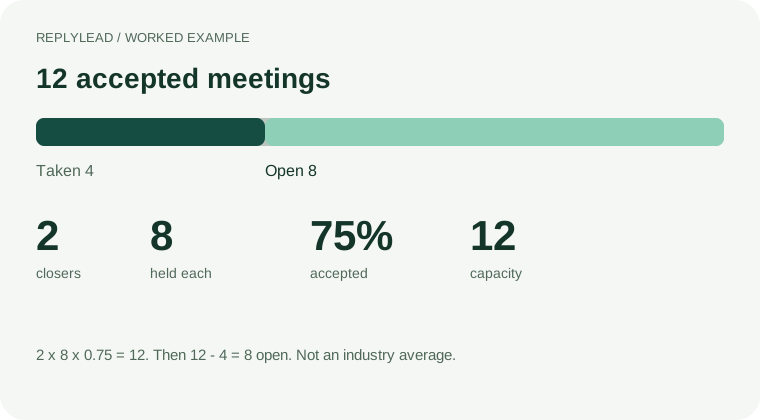
Accepted-meeting capacity equals closers times held meetings times your acceptance rate. In this worked example, 2 closers, 8 held meetings each and a 75 percent acceptance rate equal 12 accepted meetings in the period. With 4 already accepted, 8 slots remain. Those numbers are the inputs on this page, not an industry benchmark.
Calculate accepted-meeting capacity
Start with the example, then replace every field with your own period. A held meeting is one that occurs. An accepted meeting is a held meeting that passes the written standard. Booked time that never happens does not belong in the first field.
A full calendar and an empty one are different problems
Two closers who will each hold eight meetings, and who accept three out of four, can accept twelve meetings in that period. Four are already accepted, so eight slots remain. If the taken field were 14, the same team would be two meetings over the ceiling and more top-of-funnel would not be the next move.
Change one input at a time. Raising the acceptance rate without a written standard makes the ceiling look larger than the meetings the closers will actually keep. The chart beside the headline is this same example: 4 taken, 8 open, 12 in total.
Capacity is only useful next to a written standard
The acceptance rate is a judgment until the tests are written. Use the qualified sales meeting criteria page to mark role, company, problem and next step as pass, fail or unknown. Then come back and replace 75 percent with the share of held meetings that passed.
HubSpot describes a sales qualified lead as a lifecycle stage, and its sales article treats that stage as someone worth putting on the meeting calendar. Salesforce also uses the sales qualified lead name. Neither page sets how many meetings a closer at your company should hold.
Method
Capacity = closers x held meetings per closer x acceptance rate. Open slots = capacity minus accepted meetings already on the calendar. The rate is entered as a percent and divided by 100. The example is 2 x 8 x 0.75 = 12, then 12 - 4 = 8.
Blank fields, values outside the labeled ranges, and a non-numeric entry keep the last valid result and name the field that failed. The calculator does not upload the inputs. Analytics record that the button was used, not the numbers.
| Field | Counts | Does not count |
|---|---|---|
| Closers | People who will take the meetings in this period | Open roles and managers who will not attend |
| Held meetings | Meetings that occur | Booked time that is cancelled or missed |
| Acceptance rate | Share of held meetings that pass your written standard | A vendor lifecycle name |
| Already accepted | Meetings in this same period that already passed | Meetings from a different week or month |
Checked 26 September 2026. The external pages support the names sales qualified lead, meeting calendar and sales pipeline. They do not support the 12 or the 8. Those are calculated from the inputs above.
Questions
How many sales meetings can one closer handle?
Multiply the closers by the held meetings each one will take in the period, then by the share that meet your written standard. Two closers, eight held meetings each and a 75 percent acceptance rate produce 12 accepted meetings. That figure is this worked example. It is not a universal weekly quota.
What is the difference between a booked meeting and an accepted meeting?
A booked meeting is time on a calendar. An accepted meeting also passes your written tests for role, company, problem and next step. This calculator uses accepted meetings, not raw bookings.
What if the acceptance rate is unknown?
Leave the field blank and the calculator stops. An unknown rate is not zero and it is not 100 percent. Replace the 75 percent example with a rate from your own dated meetings before you use the gap.
Does this predict how many customers a team will win?
No. It is calendar arithmetic on the numbers you enter. It does not estimate a win rate, revenue or a campaign result.
What should a team under capacity do next?
Write the acceptance standard on the qualified sales meeting criteria page, then review how ReplyLead runs cold email and LinkedIn against that standard. The apply link starts a conversation about the gap. It does not reserve a meeting count.
Where this calculator stops
It does not know your sales cycle, your no-show history or your win rate. It does not apply when you have not written an acceptance standard, and it does not apply to a team that has no closer who will take a meeting. In that case the ceiling is zero until someone owns the calendar.
For campaign economics on a software contract, use the planner on the SaaS outbound page. This page answers a different question: how many accepted meetings the current closers can hold.
Sources
Checked 26 September 2026. These pages define names. They are not the source of the worked example.
- HubSpot: lifecycle stages - Sales Qualified Lead is a lifecycle stage.
- HubSpot: sales qualified lead - a stage HubSpot describes as worth a place on the meeting calendar.
- Salesforce: sales qualified lead - Salesforce uses the same name for a lead stage.
- HubSpot: sales pipeline - a pipeline is a later view of deals, not a closer's weekly ceiling.
- Salesforce: sales pipeline - a pipeline article, not a meeting-capacity study.
If the open slots are real, fill them against the standard
ReplyLead runs cold email and LinkedIn. Bring the closer count, the held-meeting limit and the written tests. We will say whether that gap is work we should take.