REPLYLEAD / INDUSTRY FIELD GUIDE
Logistics lead generationWin the right lane.
Leave the wrong freight.
Separate shippers, carriers, brokers, and logistics software. Then build around the actual lane or workflow.

THE BUYING PROBLEM
Logistics is a market.
What is the decision?
Logistics lead generation needs a clear answer to who buys what. A carrier needs freight; a shipper needs transport capacity; a broker coordinates shipments; a software vendor sells a workflow. Combining these audiences produces a list that looks large but is difficult to qualify. Start with one commercial model and define geography, equipment, shipment characteristics, and the role responsible for the decision.
The costly targeting mistake
A motor-carrier record is not a shipper directory. Keep legal entity, operating name, domain, and location as separate fields. Public fleet or safety information can help identify a company, but does not prove spare capacity, dissatisfaction, or an upcoming contract renewal.
REPLYLEAD CLIENT EVIDENCE / LGX
Shipping context becomes the conversation.
LGX combines shipping software with logistics services. The published campaign account describes ecommerce-platform and carrier signals used to shape its outreach.
Shipping software and services client
Read the LGX case studyTHE PUBLISHED RECORD
54leads in one month, reported 30 August 2024
ReplyLead reports 54 leads in a one-month campaign period. The execution notes describe ecommerce segmentation, shipping context and customer-lookalike research.
Exact month boundaries and the lead-stage definition are not supplied. The count does not establish 54 held meetings, customers or collected revenue.
Apply the relevant lesson
Use platform and carrier context to prepare a relevant shipping discussion. Confirm volumes, lanes and contract terms with the buyer before turning those research signals into a proposal.
Source: ReplyLead's published LGX account, checked 24 September 2026. A client example is context for a proposal, not a forecast for yours.
01 / WORK THE PROBLEM
Logistics lane-fit planner.
Turn a geographic lead into a quote-ready brief. A plausible shipping company still fails fit when its route, equipment, or commodity is outside your capability.
Illustrative inputs loaded. Edit them to build your own brief.
Calculations run in your browser. This tool makes no live account lookup. Our tool events record action names, not your field values.
YOUR WORKING BRIEF
Resolve capability before outreach
| Requirement | Decision |
|---|---|
| Lane | Toronto, ON to Chicago, IL |
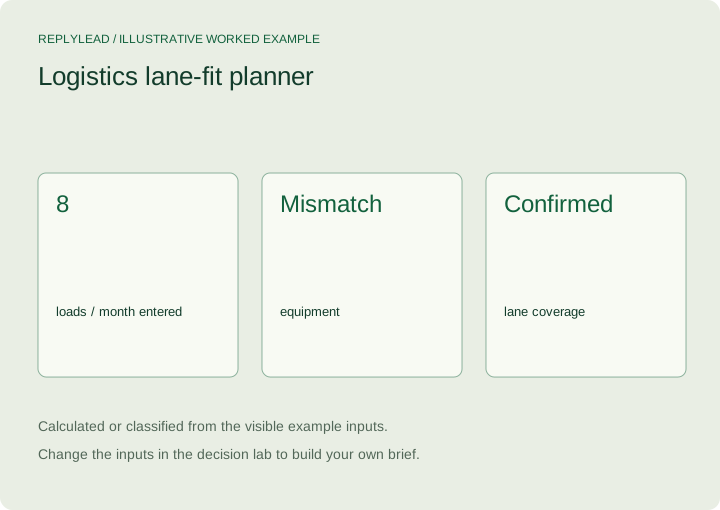
| Required / available | Refrigerated / Dry van |
| Commodity | Confirmed |
Next actions
- Equipment mismatch: Refrigerated is required; Dry van is available. Resolve with operations or exclude.
- Confirm dates, loading conditions, shipment dimensions and the buyer's quote process.
02 / FOLLOW THE REASONING
Watch the evidence
change the next step.
ILLUSTRATIVE CASE / NOT A CLIENT RESULT
A location signal is only a start
A hypothetical food distributor announces a new facility. The origin and destination are inside the carrier's operating geography.
Equipment changes the decision
The shipment needs refrigeration. The service being sold is dry-van capacity. Geography matches, but the equipment mismatch blocks the segment.
Route the next action
Resolve capability with operations or exclude the account from this campaign. A sales meeting cannot make incompatible equipment suitable. If capability is confirmed, collect frequency and quote inputs next.
03 / SELECT THE COMMERCIAL ROUTE
Different buyers.
Different first conversations.
Three adaptable logistics plays. Each connects a buying role, a verifiable reason to research, a useful asset and a handoff rule.
01Shipper acquisition
+
- Who buys
- Transportation, supply-chain, or logistics managers at companies that ship the goods your service handles.
- A reason to research
- A company announces a distribution center or a new operating market. Verify the facility and transport relevance.
- Leave out
- Carriers mistaken for shippers, unsuitable commodities, and locations outside the lanes you can serve.
- Bring something useful
- A lane-fit checklist with origin, destination, equipment, frequency, and quote inputs.
- Start the conversation
- Is someone reviewing transport coverage for the new distribution footprint?
- Accept the handoff when
- The buyer confirms a relevant lane or recurring shipping requirement and identifies the quote process.
02Carrier services
+
- Who buys
- Fleet operations or a business owner at carriers matching the service and region.
- A reason to research
- A public operating-profile update or company announcement provides a verifiable reason to assess fit.
- Leave out
- Inactive entities, unrelated equipment classes, and conclusions about safety or financial distress drawn from incomplete records.
- Bring something useful
- A service-fit sheet naming the fleet workflow, implementation work, and the information needed to assess it.
- Start the conversation
- Who owns this fleet workflow, and is a review useful in your current operating cycle?
- Accept the handoff when
- A responsible operator confirms a workflow need and a realistic evaluation step.
03Logistics software
+
- Who buys
- Operations and IT owners at logistics businesses with a workflow your product supports.
- A reason to research
- The company describes a manual coordination problem, integration project, or expansion in its own materials.
- Leave out
- Companies with incompatible workflows or unsupported systems; inferred software churn without evidence.
- Bring something useful
- A workflow and integration map that distinguishes dispatch, billing, visibility, and reporting responsibilities.
- Start the conversation
- Would a short map of the dispatch-to-billing handoff be useful for your operations team?
- Accept the handoff when
- The buyer identifies the workflow owner and a concrete integration or process question.
ReplyLead recommendations. Adapt the message to the actual evidence; these are not tested winning scripts. Download the three-play worksheet.
04 / KNOW WHAT THE SOURCE PROVES
Useful evidence.
Clear boundaries.
The source should change the account decision. Record its date and the field it actually supports; keep the missing information visible.
| Source or artifact | Use it for | Still needs confirmation |
|---|---|---|
| FMCSA carrier records | Carrier identity and published operating records | Not a directory of shippers, current spare capacity or buying intent. |
| Shipper announcement | A documented facility or distribution change | Does not establish shipment frequency or the lanes open to new bids. |
| Operations / buyer | Equipment, commodity, origin, destination and quote route | Confirm each requirement before describing the lane as a fit. |
Reference: FMCSA company safety records. Account-specific sources in this table are evidence to collect, not claims that a prospect has been verified.
FIRST-PARTY MEASUREMENT
2.12%Median unique replies per contacted lead.
81 campaigns with at least 500 contacted leads.
Know what the number measures.
ReplyLead's frozen August 12, 2026 extraction includes automatic replies and mixes client and internal programmes. It is a cross-campaign reference, not an industry target, positive-reply rate or meeting forecast.
For an industry cohort, separate human replies, positive replies, booked meetings, held meetings and sales-accepted opportunities. Keep the contacted-person denominator and maturity window consistent. A result from a different audience is not a substitute for your segment's evidence.
Inspect the benchmark definitions and datasetSource: ReplyLead campaign benchmark, checked 24 September 2026.
BEFORE YOU LAUNCH
The questions that
change the brief.
What does the logistics lane-fit planner produce?
Turn a geographic lead into a quote-ready brief. A plausible shipping company still fails fit when its route, equipment, or commodity is outside your capability. It exports your entered inputs, the resulting decisions and the next actions as a CSV working brief.
What qualifies a logistics lead for a sales handoff?
Pass the operating model, lane or workflow, current arrangement if voluntarily supplied, timing, responsible person, and next step to sales. Keep software discovery separate from a freight quote so the receiving team can act on the conversation.
Are the examples measured ReplyLead client results?
The annotated examples are illustrative planning cases. The 2.12% benchmark is separately identified first-party mixed-programme evidence with automatic replies included. No industry conversion rate is inferred from it.
How to use this field guide.
Choose a buying situation, work through the decision lab, and attach a source and date to the facts that drive the result. Confirm unresolved requirements with the appropriate owner before launch. The tool rules are visible in the worked example and produce a planning brief from your inputs; they do not verify accounts or predict campaign outcomes.
ReplyLead runs cold email and LinkedIn. Review the operating process, commercial terms and documented client examples when evaluating a managed program.
Where judgment still matters.
A motor-carrier record is not a shipper directory. Keep legal entity, operating name, domain, and location as separate fields. Public fleet or safety information can help identify a company, but does not prove spare capacity, dissatisfaction, or an upcoming contract renewal.
The playbooks address B2B account acquisition. They do not establish contact permission or a legal determination. Apply your organization's contact, suppression and jurisdiction review before outreach.
Sources behind the method.
Checked 24 September 2026. Public references support the stated definitions. Account-specific facts still need a dated record from the buyer or an appropriate primary source. The planning choices and examples are ReplyLead recommendations.
- FMCSA company safety records: Describes carrier identification and safety-record resources; not shipper demand.
- ReplyLead benchmark and methodology: the scoped cross-campaign statistic above.
- ReplyLead operating process: cold email and LinkedIn program context.
- Google sender guidelines: Authentication and sender requirements for personal Gmail recipients. Checked 24 September 2026.
- Yahoo sender best practices: Yahoo-specific requirements to review before a campaign; separate from account fit. Checked 24 September 2026.
- RFC 5321: SMTP: Transport acceptance is separate from inbox placement or a human response. Checked 24 September 2026.
- NIST Cybersecurity Framework: Reference vocabulary for vendor risk-management responsibilities; not a prospect diagnosis. Checked 24 September 2026.
- Census NAICS: Classification describes establishments; verify the actual business activity and buying unit. Checked 24 September 2026.
BUILD WITH REPLYLEAD
Bring the market.
Leave with a sharper brief.
Bring your target buyer, delivery boundaries and the working brief. Define the account evidence, message and sales handoff for your industry.
Discuss your logistics program