Cold email sequence / updated 8 October 2026
A cold email sequence: the structure, the follow-up, and the replies to expect
A cold email sequence is the first email, then the follow-ups sent only to people who have not replied. On ReplyLead's book, the median campaign among 81 campaigns with at least 500 contacted leads drew replies from 2.12% of contacted leads. Across all 115 sending campaigns the pooled rate was 2.58%, which is 6,249 unique replies from 242,669 contacted leads. Those replies include automatic replies. They are not meetings. Snapshot 12 August 2026.
What is a cold email sequence?
One email is not a sequence. A sequence is the plan for what happens when nobody answers. The first email goes to the contacted lead. Each later email goes only to the people who have not replied. The moment a person replies, including an out-of-office or another automatic reply, that person is out of the sequence.
ReplyLead runs this on cold email and on LinkedIn. The meeting, when there is one, is booked onto the client's calendar. The client takes the sales call. The reply rate on this page is not the count of those meetings.
How a cold email sequence is structured
The first email has five short lines and a hard cap. ReplyLead aims for about 65 words and stops at 80. The first two lines say who the person is and what is going on for them. The next two say how that problem is handled. The last line asks for a reply, not for a 30-minute meeting. Past 80 words the email stops being about the reader.
Each follow-up is one sentence. It names the point again and asks whether it is worth a look. "Just following up", "circling back", and "touching base" are not used, because they add no information. A subject line has to say what the email is, who it is for, or what it asks. Two of those three are enough.
The word cap and the subject tests are writing rules. They are scored by the cold email copywriting page. The campaign book does not report a separate reply rate for emails under 80 words and emails over 80 words, so this page does not invent one.
Follow-up timing: who gets the next email
The timing question has two parts, and only one of them is measured. Who receives the follow-up is measured in the definition: a person who has not replied. How many days to wait is ReplyLead's operating choice, and the 12 August 2026 book does not test whether three days beats five. Treating a gap as the cause of a reply rate would be a claim the file does not support.
How many touches to send, and when to stop, is the subject of cold email follow-up. The shape of a short cadence is on email cadence. This page does not replace those. It says what a sequence is, and what reply count the measured rates imply, before you argue about the gap between touches.
How many replies a sequence should expect
Start from contacted leads, not from emails sent. One person can receive the first email and a follow-up, so emails sent are larger than contacted leads. On the full book, 115 campaigns sent 429,763 emails to 242,669 contacted leads. The reply denominator is the contacted lead.
Two rates, and they are not interchangeable. The 2.12% median gives each campaign an equal vote, and it is limited to the 81 campaigns with at least 500 contacted leads. The 2.58% pooled rate weights campaigns by how many people they contacted, and it covers all 115. A large campaign moves the pooled rate more than it moves the median.
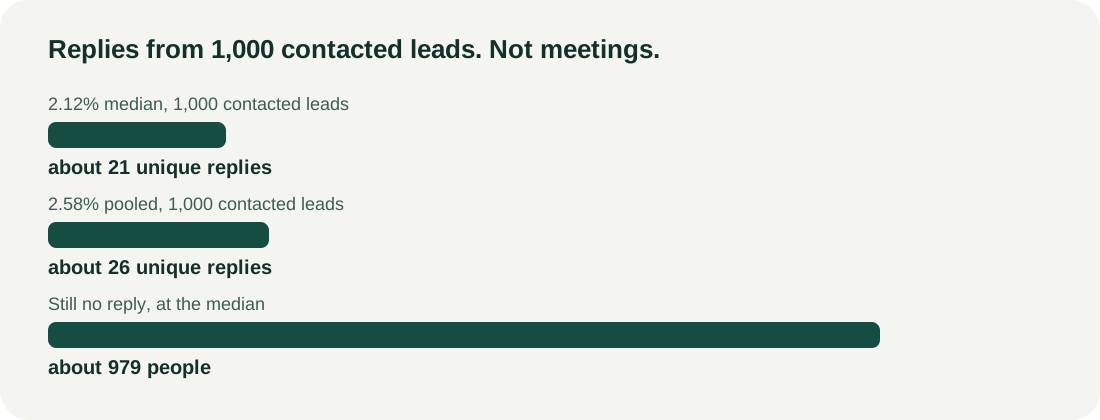
Calculated replies, not meetings
1,000 contacted leads imply about 21 unique replies at the 2.12% median and about 26 at the 2.58% pooled rate. About 979 people would still have no reply at the median, which is the group a follow-up can still be sent to. Automatic replies are included. These are not meetings.
The size bands on the same snapshot, for campaigns with at least 500 contacted leads, are pooled rates of 1.99% (33 campaigns, 500 to 1,999 contacted leads), 2.69% (37 campaigns, 2,000 to 4,999), and 2.62% (11 campaigns, 5,000 or more). Campaign size is tied up with targeting and duration. These bands do not prove that sending to more people raises the rate.
A cold email sequence for a SaaS company
SaaS does not get its own row in the 12 August book. The 2.12% median mixes the campaigns that were sending that day. Using it as "the SaaS reply rate" would invent a cut the file does not contain.
What does change for SaaS is the list and the first two lines. The person has to own the problem the product handles, and the first lines have to name something true about that company this month. A job post, a new leader, a funding round, or a public technical fact is the kind of signal ReplyLead uses to decide who is on the list. If nobody can name the signal, the list is an export, and the sequence is being asked to do the job the list failed to do.
The sending pace does not change with the vertical. Google documents 2,000 messages a day and 3,000 external recipients for a paid Google Workspace user. Microsoft documents 10,000 recipients a day for an Exchange Online mailbox, plus a tenant limit on external recipients. Those are ceilings. ReplyLead sends about 10 to 12 cold emails per Google Workspace mailbox a day, and about 1 to 2 per Microsoft 365 mailbox a day.
Where the sequence sits in the rest of the work
The sequence is one piece. The list, the domains, and the reply handling decide whether the words are worth sending. Infrastructure for that work starts at $2,023 a month, plus an agreed share of closed revenue. The infrastructure amount remains in a month where nothing closes. No revenue share is owed for that month.
If you want the sequence run, the form on the homepage takes the name and email before any calendar step. Pricing detail is on pricing. The channel math is on outbound lead generation.
When this does not apply
- You need a meeting rate. This page does not have one. A reply, as counted here, includes automatic replies.
- You need a SaaS-only benchmark. The book is not cut that way.
- You need proof that day-three beats day-five. The file does not test the gap between touches.
- You need the agency to close the deal. ReplyLead books the meeting. The client closes.
- Your deals cannot carry $2,023 a month. The sequence does not change that arithmetic.
How these numbers were produced
The rates are copied from the cold email benchmark summary extracted 12 August 2026 and published on the benchmarks page. A reply is a unique responding contact inside a campaign. Automatic replies are included. Contacted leads are summed at campaign level and are not deduplicated across campaigns. The pooled rate is 100 times total unique replies divided by total contacted leads. The 2.12% median is the unweighted median of campaign rates for the 81 campaigns with at least 500 contacted leads. The 2.58% figure is the pooled rate for all 115 campaigns, rounded from 2.575%. The calculator multiplies the contacted-lead count you type by those published rounded rates and rounds to the nearest reply. It does not predict a future campaign. The word cap and the one-sentence follow-up are ReplyLead's writing rules, not results from this snapshot.
Questions
What is a cold email sequence?
A cold email sequence is the first email to a person who has not asked to hear from you, plus the later emails sent only to people who have not replied. At ReplyLead the first email aims for about 65 words and stops at 80. Each follow-up is one sentence. A reply, including an automatic reply, stops the sequence for that person.
How many replies should a cold email sequence expect?
Use the measured rates, and do not treat a reply as a meeting. Across 81 ReplyLead campaigns with at least 500 contacted leads, the median campaign reply rate was 2.12% of contacted leads. Across all 115 sending campaigns the pooled rate was 2.58%: 6,249 unique replies from 242,669 contacted leads. Both figures include automatic replies. Snapshot 12 August 2026.
When should a cold email follow-up be sent?
ReplyLead sends a follow-up only to people who have not replied, and each follow-up is one sentence that restates the point and asks if it is worth a look. The published campaign book does not measure whether a particular gap, in days, changes the reply rate. Spacing rules for how many touches and when to stop are on the follow-up page.
How long should the first cold email be?
ReplyLead's first emails aim for about 65 words and stop at 80, in five short lines. That is our writing rule. The campaign book does not split reply rate by word count, so this page does not claim that 80 words produces more replies than a longer email.
Does the same sequence work for SaaS?
The shape is the same. What changes is who is on the list and what the first two lines say about their situation. The 2.12% median is not a SaaS-only rate. It is the median across 81 mixed campaigns with at least 500 contacted leads. A SaaS list does not inherit that number as its own.
What is not included in the reply rate?
A reply is a unique responding contact inside one campaign, and automatic replies are included. The rate is not a positive reply, not a meeting, and not revenue. People are not deduped across campaigns. The full definitions are on the cold email benchmarks page.
Sources
- ReplyLead cold email benchmarks - 115 campaigns, 242,669 contacted leads, 6,249 unique replies, 2.58% pooled, 2.12% median on the 81 campaigns with at least 500 contacted leads. Snapshot 12 August 2026.
- A realistic cold email reply rate - the same 2.12% median, with the same limit that a reply is not a meeting. Checked 8 October 2026.
- Cold email follow-up - how many touches, and when to stop. Checked 8 October 2026.
- Email cadence - the short cadence shape. Checked 8 October 2026.
- Cold email copywriting - the word cap and the subject tests. Checked 8 October 2026.
- ReplyLead pricing - infrastructure from $2,023 a month, plus an agreed revenue share. Checked 8 October 2026.
- Google Workspace Admin Help, Gmail sending limits - 2,000 messages a day and 3,000 external recipients for a paid user. Checked 5 October 2026.
- Microsoft Learn, Exchange Online limits - 10,000 recipients a day per mailbox, plus a tenant external recipient limit. Checked 5 October 2026.
Book a call
If you want this sequence run on cold email and LinkedIn, use the form on the homepage. The name and email are saved there before the calendar step. Infrastructure starts at $2,023 a month.