Cold Email Follow-Up Sequences That Book Meetings
The first email rarely lands the meeting. The follow-ups do. Here is how to build a sequence that stays persistent without becoming a nuisance.
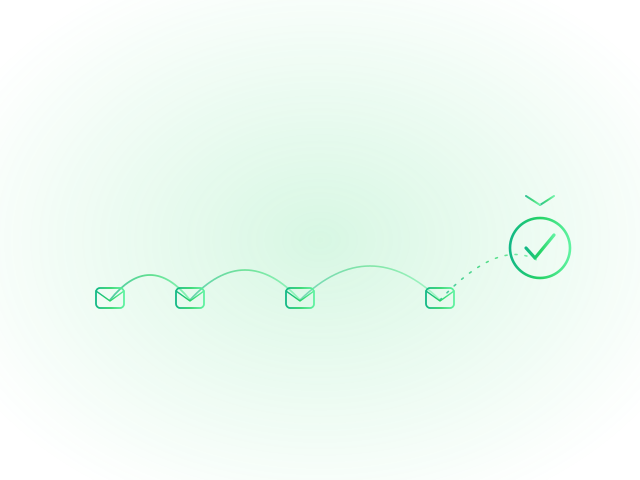
Here is the uncomfortable truth about cold email: your first message is usually ignored, and that is normal. Busy decision-makers miss emails, deprioritize them, or mean to reply and forget. The teams that book meetings are not the ones with a magic opener, they are the ones with a disciplined follow-up sequence. Most positive replies arrive after the first email, not on it.
Why follow-ups do the heavy lifting
A single email is a single roll of the dice. A sequence gives you several chances to catch the reader at a moment when your message is relevant and they actually have a spare minute. Persistence signals seriousness, and spacing the messages out means you eventually land in the inbox on a good day. None of this works if the follow-ups are lazy, but done well, the sequence is where cold email earns its results.
How many follow-ups to send
Three to five messages total, including the first email, is the sweet spot for most B2B campaigns. Enough to be persistent, not so many that you become the sender people filter on sight. Beyond five, replies drop sharply and the annoyance cost climbs. Quality per message matters far more than raw count, five sharp emails beat ten forgettable ones.
How to space them out
Spread the sequence over roughly two weeks, with gaps that widen as you go. A simple, reliable cadence is day 1, day 3, day 7, and day 12. Early messages can sit closer together while the thread is fresh, and later ones need more room so the sequence reads as steady interest rather than pestering. Sending every day is the fastest way to get muted or marked as spam, which also hurts your deliverability.
What each follow-up should actually say
This is where most sequences fail. A follow-up that only says "just circling back" or "bumping this to the top of your inbox" gives the reader nothing new to react to. Every message should add an angle:
The second email can add a proof point or a specific result. The third can reframe around a different use case or pain point, in case the first angle missed. The fourth can offer something genuinely useful, a short resource or a relevant example, with no ask at all. The last can be a short, graceful break-up that makes it easy to say "not now" or "talk to the right person." Each one earns its place by giving the reader a fresh reason to reply.
When to stop
Respect the silence. If someone has not responded after a well-built sequence, keep it clean: send a brief, friendly break-up email and move on. It often earns a surprising number of replies precisely because it removes the pressure, and it protects your reputation and your list. A good sequence knows how to end.
The bigger picture
Follow-ups sit on top of everything else, a good list, relevant copy, and healthy sending infrastructure. Get those right and a disciplined sequence multiplies them. Get them wrong and no amount of following up will help. For how all the pieces fit together, see the complete guide to B2B cold email.
The full playbook this article summarizes — how many touches, spacing, a new angle each time, the break-up note and when to stop — lives on cold email follow-up sequences, and the numbers worth watching while a sequence runs are on cold email metrics.
Want us to build and run the whole sequence for you? Apply to work with us →